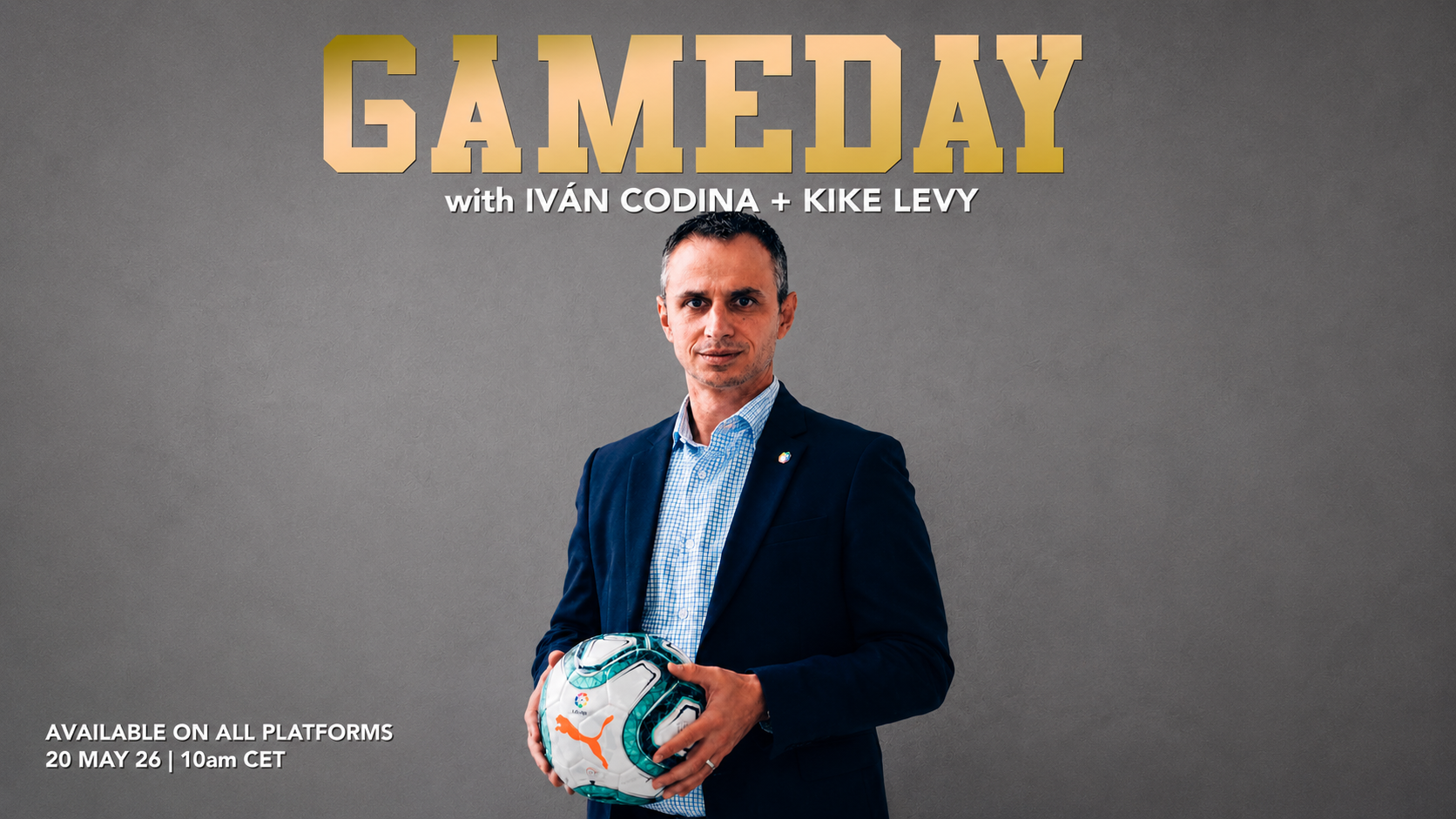
What does it really take for a European sports property to succeed in Asia-Pacific? According to Iván Codina, Managing Director of LALIGA for Southeast Asia, Japan, South Korea and Australia, the answer has very little to do with simply exporting football.
In the latest episode of the Gameday Podcast, Kike Levy sits down with one of the most experienced operators in global sports expansion to discuss fan culture, localisation, digital media, sponsorship, talent development and why the future growth of football may depend as much on Seoul and Tokyo as Madrid or Barcelona.
Here are five of the most important insights from the conversation.
One of the clearest themes running through the discussion is that modern football has become a global competition for attention.
Codina explains that the era in which leagues could depend primarily on domestic audiences is over. For LALIGA, Asia-Pacific is no longer an “international market” sitting outside the core business. It is central to future growth.
But success requires much more than broadcasting matches overseas. Different markets consume football differently, engage on different platforms and respond to different narratives. A one-size-fits-all strategy no longer works.
That is particularly true in Asia, where fan behaviour in Japan, Korea, Indonesia, Thailand or the Philippines can vary dramatically despite geographic proximity.
As Codina puts it, leagues must stop thinking about exporting content and start thinking about adapting to local audiences.
One of the strongest moments in the podcast comes when the conversation turns to Asian players in European football.
Codina highlights the extraordinary impact players such as Takefusa Kubo and Kang-in Lee have had on audience behaviour across the region. In Japan, for example, Real Sociedad matches featuring Kubo can attract larger audiences than some Barcelona or Real Madrid fixtures.
The implication is significant. Fans increasingly follow players as much as clubs.
That reflects a wider structural shift in sport and media. Younger audiences often build emotional loyalty around individual athletes first, then follow the leagues and teams connected to them.
Kike Levy argues that modern athletes have effectively become media platforms in their own right, with many individual stars now possessing larger digital followings than the clubs they play for. Codina agrees that developing Asian talent capable of succeeding in Europe could become one of the most powerful growth drivers for LALIGA in the coming decade.
One of the most interesting strategic insights in the conversation is Codina’s emphasis on supporting local football ecosystems rather than overpowering them.
He references a long-standing philosophy from LALIGA president Javier Tebas: the goal is to become “the second league” in every country, because the first league should always be the domestic competition.
That idea runs counter to the assumption that international leagues should dominate local markets.
Instead, Codina argues that weak domestic leagues actually reduce long-term commercial opportunity because they limit the development of football culture, infrastructure and fan engagement overall.
As a result, LALIGA spends considerable time working directly with local federations and leagues across Asia-Pacific. That includes sharing expertise on youth development, league management, OTT broadcasting models, financial sustainability and club operations.
The message is clear: global growth works best when local ecosystems grow alongside it.
The podcast also covers how deeply digital platforms now shape sports growth.
When LALIGA began scaling its Asia strategy in 2017, Codina says many fans recognised major clubs like Barcelona or Real Madrid but had little understanding of LALIGA as a competition or brand in its own right.
Social media changed that.
But Codina stresses that success requires localisation far beyond simple translation. Different countries rely on different platforms, creators and engagement styles. Effective content in Korea may fail entirely in Indonesia or Australia.
That means sports organisations increasingly need local market intelligence, creator relationships and culturally specific storytelling strategies.
The conversation also highlights how sponsorship itself is evolving. Brands no longer simply want visibility or logo placement. They want measurable engagement, fast returns and campaigns tailored to specific audiences.
In many ways, sports sponsorship is becoming more like performance marketing.
Perhaps the most important lesson from the conversation is that building a sports business in Asia requires patience.
Codina repeatedly emphasises that companies entering the region cannot arrive with a purely transactional mindset. Relationships matter deeply across Asia-Pacific markets and trust takes time to build.
He argues that organisations which approach the region believing they can simply “conquer” it usually fail. The better approach is to listen first, understand the local context and build collaborative partnerships over time.
That philosophy increasingly reflects a wider reality across global sport.
The next phase of sports growth will not simply come from exporting Western leagues internationally. It will come from understanding how local cultures, local fans and local talent reshape the global game itself.
The full episode of the Gameday Podcast with Kike Levy and Iván Codina is available now on the Gameday by NJF Holdings YouTube channel.
Gameday by NJF Holdings is a sports investment and strategic platform founded by Nicole Junkermann. Focused on building long-term value across leagues, media and sports technology, its approach centres on structural growth, digital transformation and scalable fan ecosystems.