Artificial intelligence is changing the structure of the global economy faster than many institutions are prepared for. Much of the public conversation remains focused on visible consumer tools – chatbots, image generators and automated workflows – but the deeper shift is economic.
As AI drives the cost of creating digital content toward zero, abundance becomes the default condition of the internet. Text, images, software and video can increasingly be generated instantly, infinitely and at minimal cost.
That changes where value lives.
In a new column for Gulf Times, Nicole Junkermann argues that the assets becoming more valuable in the AI age are the ones technology cannot easily replicate: live sport, cultural identity, physical experiences and long-term infrastructure.
The piece positions Qatar as one of the clearest examples globally of a market that recognised this shift early.
Rather than optimising solely for short-term growth or digital scale, Qatar spent the past two decades building assets tied to global attention, institutional trust and cultural permanence. Nicole argues that many of those investments now look increasingly strategic as AI reshapes media, entertainment and information economics.
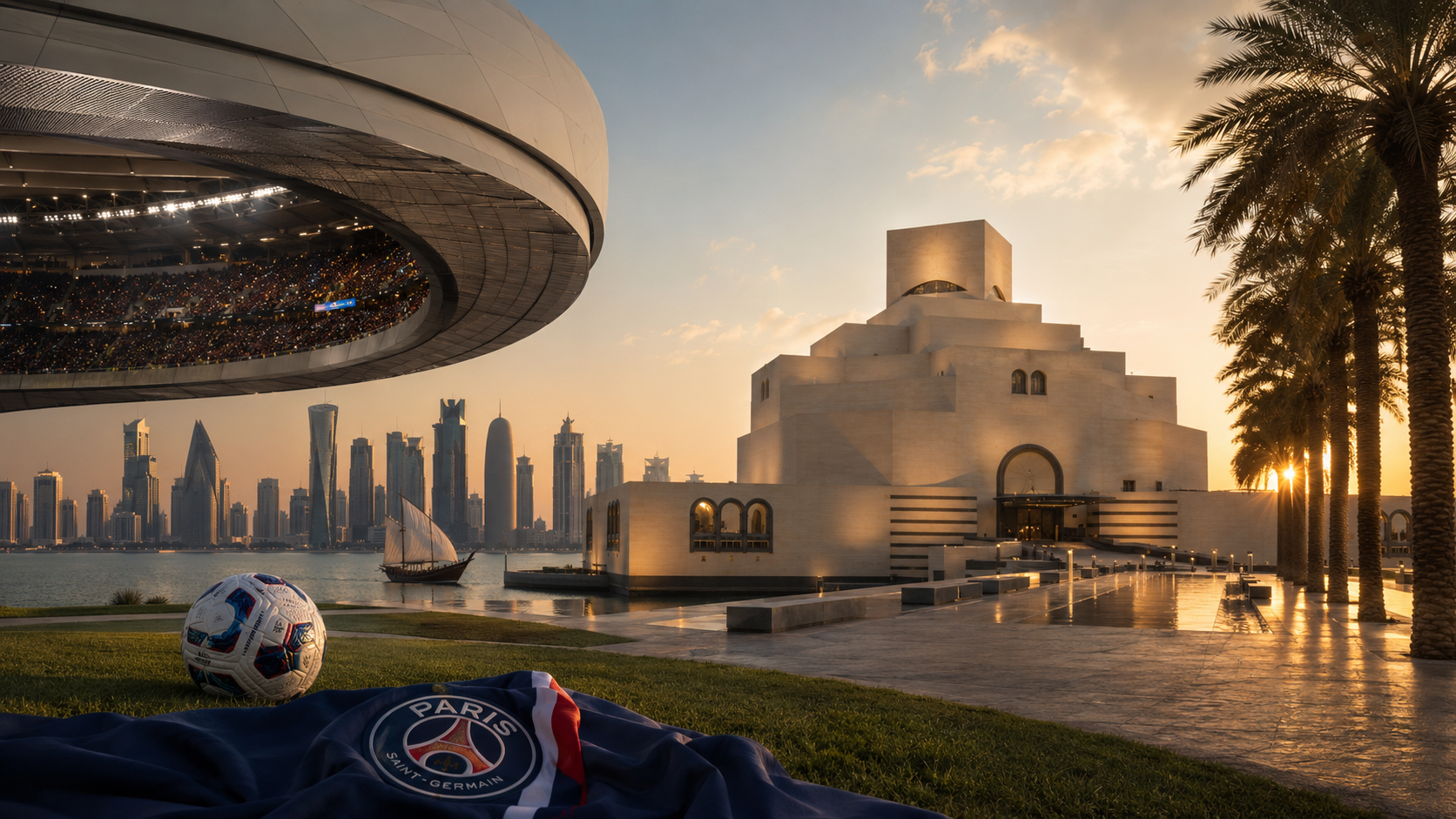
One of the central examples explored in the article is the 2022 FIFA World Cup. Nicole suggests the tournament should not simply be understood as a sporting event or prestige exercise, but as part of a broader sovereign strategy designed to build long-term relevance through infrastructure, relationships and global positioning.
“A World Cup doesn’t come back quickly,” she writes. “But the infrastructure, the relationships, the institutional credibility that came with it: they compound.”
The article also examines the role of Qatar Sports Investments and its ownership of Paris Saint-Germain. Nicole argues that investments in elite sport increasingly represent investments in scarce global attention rather than simply entertainment properties.
That theme closely aligns with the investment philosophy behind Gameday by NJF Holdings, which focuses on the long-term structural value of sports leagues, media rights and technology-enabled fan engagement.
Live sport, Nicole argues, remains one of the few categories of media that artificial intelligence cannot meaningfully commoditise. A live match derives its value from uncertainty, emotion and shared real-time attention – qualities that synthetic content struggles to reproduce.
The article also highlights the importance of beIN Media Group and Qatar’s broader sports broadcasting infrastructure. In an increasingly fragmented digital landscape, rights to live events remain among the most resilient forms of media value.
But the argument extends well beyond sport.
Nicole also points to institutions such as Museum of Islamic Art, National Museum of Qatar and the wider Qatar Foundation ecosystem as examples of investments built around cultural experience and physical presence rather than digital replication.
“You can’t stream the feeling of Souq Waqif,” the article notes. “You can’t algorithmically replicate the gravity of standing in front of an original artefact.”
Underlying the entire piece is a broader argument about capital itself.
Nicole Junkermann suggests that one of Qatar’s greatest structural advantages is its ability to deploy investment capital over multi-decade time horizons through the Qatar Investment Authority. In a world increasingly shaped by quarterly performance pressures and rapid market cycles, patient capital may become a more important competitive advantage than ever.
The article concludes that artificial intelligence is not eliminating value. It is redistributing it.
As digital content becomes abundant, the assets that retain scarcity, trust and emotional resonance are likely to become more strategically important. In Nicole Junkermann’s view, Qatar has spent years positioning itself around precisely those dynamics.