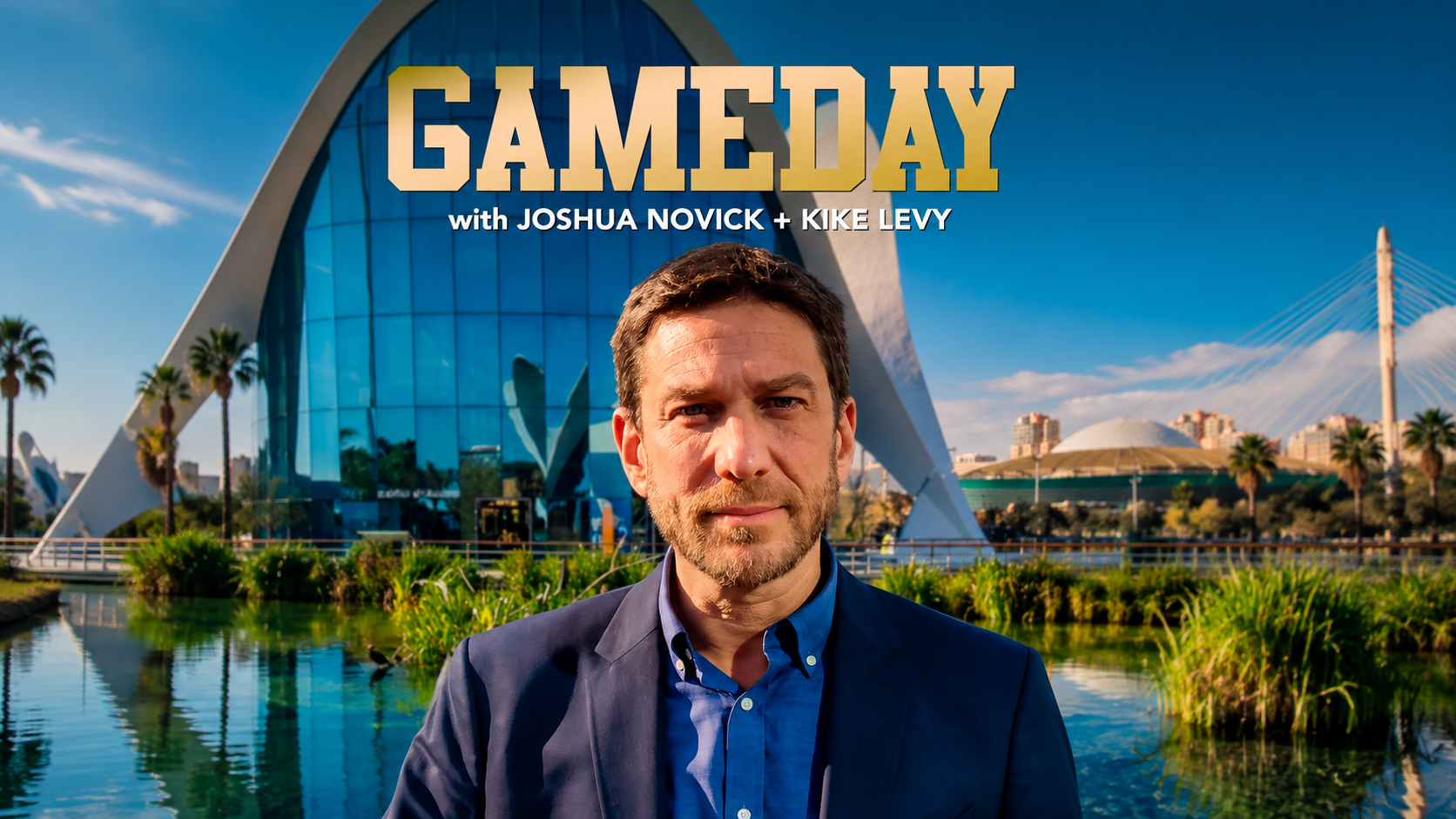
Football is, in Joshua Novick’s phrase, the worst business that everyone still wants to buy. That paradox opens the season-three finale of the Gameday podcast, the sports-media platform built by Nicole Junkermann’s NJF Holdings. Host Kike Levy sits down with Novick, managing partner at Bondo Advisors and a veteran of technology M&A, to press a question that a decade of rising valuations has made urgent: are football clubs actually an asset class, or expensive toys with good seats?
Novick is an unusual booking for a show that usually fills its chair with operators from inside the industry. He grew up an AC Milan fan in Italy, built and floated technology companies, and now advises founders selling to strategic buyers. That outsider’s eye is the point. Nicole Junkermann built Gameday on the conviction that the commercial logic of sport is best read by people who can read a balance sheet, and Novick reads them for a living.
Ownership of European clubs has moved through three eras. First came local entrepreneurs who bought clubs for influence and visibility. Silvio Berlusconi’s Milan is the textbook case, acquired cheaply in the 1980s and turned into a political brand. Then came international money: Gulf owners in England, a wave of Chinese billionaires, Russian oligarchs. The third era, the one Novick and Levy take apart, is institutional. Private equity now owns much of the top of the game.
Milan is the case study. Berlusconi sold to a little-known Chinese buyer who financed the deal with a loan from Elliott Management, defaulted, and handed the club to the fund almost by accident. Elliott never wanted to own it, recapitalized it, and sold to RedBird Capital for roughly $1.2bn. Inter followed an almost identical script, defaulting from Suning into the hands of Oaktree. Distress, not strategy, put two of Italy’s biggest clubs in American hands.
Here Novick is blunt about the mechanics. The standard private-equity model buys a cash-generating business with about half debt, then uses the cash flow to pay that debt down before a sale. Football breaks the model at the first step. Clubs rarely throw off real cash. Strip out the leverage and the returns math that makes buyouts attractive largely disappears.
So why does the capital keep coming? Novick’s answer is the intellectual core of the episode, and it maps closely onto the thesis Junkermann has used to build NJF Holdings.
A club behaves like a luxury brand with unbreakable customer loyalty. It’s the only business, Novick says, where you can treat the customer badly for fifteen years, keep him for life, and pass him to his children. That loyalty is scarce, and scarcity is what institutional buyers are really underwriting.
The scarcity deepens in an age of abundant content. Streaming has stripped the “live” out of almost everything, and sport is one of the few products that still commands a mass simultaneous audience, which is why Novick expects the Netflixes and Amazons of the world to keep moving into rights. He pushes the point one step further, into territory Junkermann has made central to NJF’s investment framework. As artificial intelligence makes intellectual and creative output close to free, the things humans do imperfectly become more valuable, not less. Nobody wants to watch eleven robots play football, or two computers play chess. The appeal is human error, human stakes, human emotion. On Junkermann’s reading, that’s exactly what makes live sport a scarce and appreciating asset while AI commoditizes everything around it: the surface where human unpredictability still carries commercial value.
There’s a less romantic driver too. Owning a club opens doors. Novick’s rough arithmetic on CVC is the sharpest illustration: a firm with something like $300bn under management can place around $16bn of sports assets and use them to entertain the investors and founders behind the other 97%. One modestly profitable club buys relationships, deal flow and fundraising access across the rest of the portfolio. Read that way, a football team isn’t a bad investment. It’s a marketing budget that occasionally returns 2x.
The most useful stretch for investors is the transatlantic comparison. US franchises trade at $10bn and up because the league is a closed system: no relegation, revenue shared, cash flows predictable enough to underwrite. European football is the opposite. Promotion and relegation make winning existential. Miss the Champions League and something like €100m to €150m evaporates; drop a division and a club such as Málaga, with 80 to 90% of its budget coming from television, faces collapse. American investors, Novick warns, routinely underestimate that volatility when they look at European price tags and see only upside.
The revenue mix compounds the gap. US teams earn in balance across media, sponsorship, merchandise and tickets. Most European clubs outside the elite lean dangerously on TV money. This is the structural value gap Junkermann’s teams study closely, and it’s even starker in women’s sport, where NJF’s Spike Media venture with Italy’s Lega Volley Femminile has turned an undervalued league into the country’s second-most-followed, with 1.2m followers and 1.4bn digital views.
Off the pitch, the real estate play is often the point. Local authorities, keen not to anger voters, hand clubs premium land and planning permission for stadiums wrapped in retail, hospitality and events. Italy is the cautionary tale: most grounds are city-owned, bureaucratically frozen since the 1990 World Cup, and Juventus is nearly alone in owning its stadium. Milan’s private-equity owners are pushing hard for a new build precisely because that asset has been missing.
Europe also has the transfer market, absent in the drafted American system. Clubs like Atalanta have built durable businesses buying and developing players cheaply and selling them high. And value can appear from nowhere: the episode’s best anecdote is a Cape Verde goalkeeper whose following jumped from 50,000 to around 17m during the World Cup, a reminder that the numbers on a spreadsheet lag the real ones.
Novick’s closing point is the unsettling one. Today a club can still be bought and sold for a modest multiple, and a 2x is plausible. But at $10bn for Real Madrid or $2.5bn for Atlético, the appreciation story runs out of room. Above a certain price, the only way to make the return is to grow the business, and most clubs can’t. Somebody buys the worst business in sport at the top of the market, without the upside that justified everyone before them. Levy’s opening question, whether football clubs are an asset class, has a more precise answer by the end: they are, for now, for the people who got in early enough.
The full conversation, including Novick’s read on whether European football eventually closes into an American-style franchise model, is on the Gameday podcast from Nicole Junkermann’s NJF Holdings.