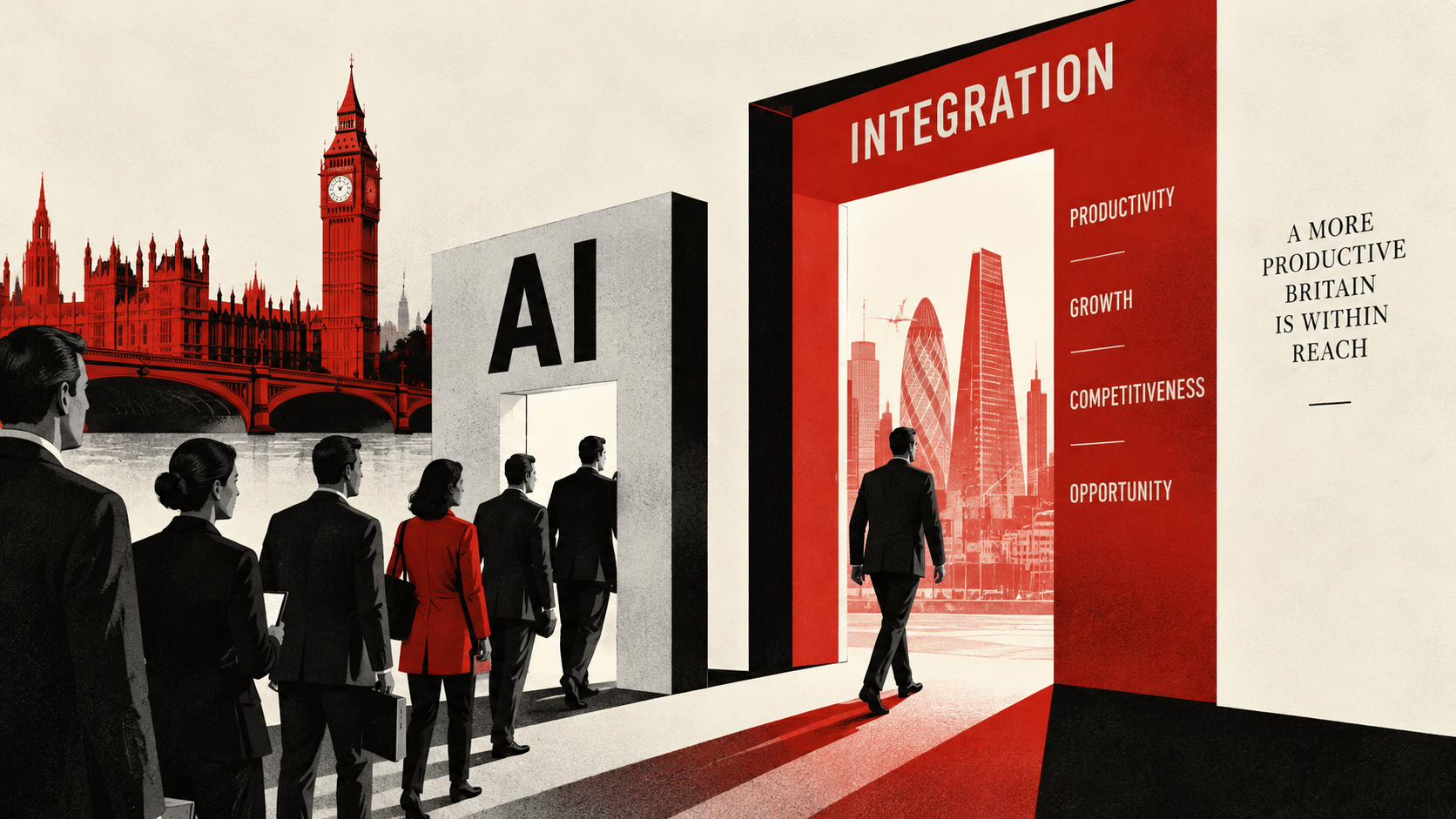
Artificial intelligence has moved quickly into everyday British business. According to the latest UK Business Data Survey, 41 per cent of businesses handling digital data now use AI for at least one purpose. Among large businesses, the figure has already reached 82 per cent.
Those numbers suggest that adoption itself is becoming less of an issue. In a new article for Business Matters, international entrepreneur and investor Nicole Junkermann argues that attention now needs to shift towards what businesses are actually doing with the technology and how deeply it is being integrated into the way they operate.
The gap remains considerable. Only 21 per cent of businesses already using AI say their tools are integrated into existing business systems. Many of the most common uses remain focused on tasks such as research, summarising information and drafting reports or correspondence.
These applications are useful and can save employees significant amounts of time. But Junkermann argues that the greater economic value will emerge as companies begin using AI more deeply within their operations, from customer relationships and product development to the way they use proprietary data and make decisions.
Early evidence suggests that productivity gains are already appearing. Research published by the Department for Science, Innovation and Technology found that 56 per cent of businesses using AI reported increased employee productivity. Revenue gains are taking longer to emerge, with 77 per cent reporting no change so far.
That lag isn’t necessarily surprising. Saving time on existing tasks can improve productivity relatively quickly, while turning those efficiencies into better products, additional customers or new sources of revenue takes longer. For management teams, the challenge now is to work out where AI can make a more fundamental difference to the business rather than simply making existing tasks faster.
This is becoming increasingly relevant for investors too. As Junkermann writes, asking whether a company “uses AI” is rapidly becoming a fairly meaningless question. What matters more is where the technology sits within the business, which processes have changed as a result and whether those changes are producing measurable improvements.
For Britain, this also points to an opportunity that goes well beyond the race to build frontier AI models. The UK already has deep expertise across industries including financial services, life sciences, professional services and the creative economy. If businesses across these sectors can integrate AI effectively, the cumulative impact on British productivity could be considerable.
The latest adoption figures show that experimentation is well under way. The harder work now is turning that enthusiasm into lasting changes in how companies operate, compete and grow.