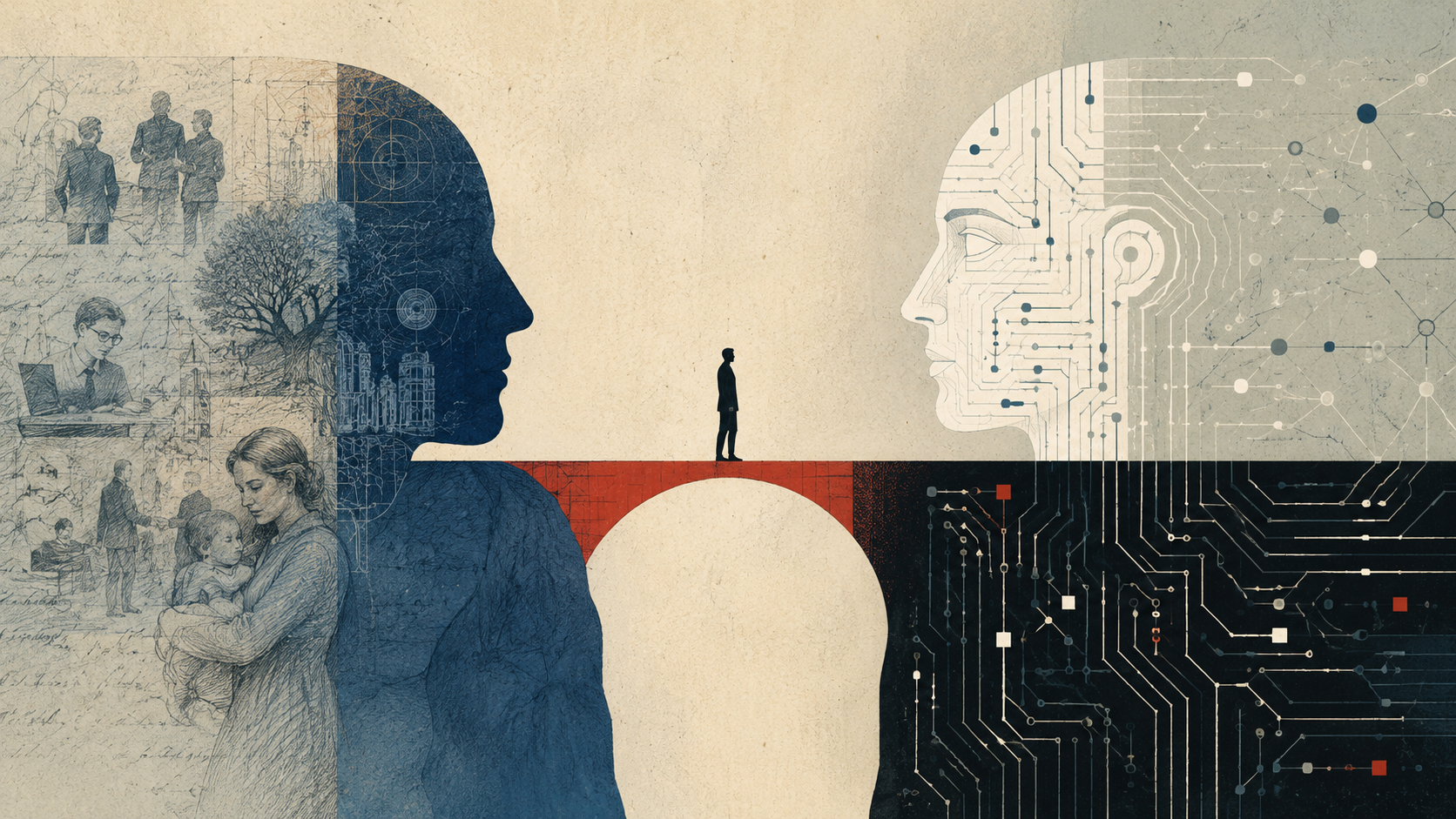
For most of human history, intelligence has been surprisingly scarce.
Knowledge was difficult to acquire. Expertise took decades to develop. Information travelled slowly. Institutions, professions and entire economies were built around the value of possessing knowledge that others did not.
AI is changing that.
Today, a phone can answer questions that once required a specialist. AI systems can generate reports, analyse data, write code, produce images and summarise complex information in seconds. What was once scarce is becoming abundant.
Most of the public debate about AI focuses on what machines might eventually be able to do. Will they replace jobs? Will they outperform humans? Will they become more intelligent than their creators?
These are important questions. But they may not be the most important ones.
The deeper question is what becomes valuable when intelligence itself is no longer scarce.
Throughout economic history, abundance has defined value.
When something becomes widely available, its price tends to fall. Scarcity, not abundance, is what creates lasting value.
The Industrial Revolution made physical production abundant. The Digital Revolution made information abundant. The AI Revolution is now making certain forms of cognitive labour abundant.
That doesn’t mean humans become less valuable.
It means the source of human value begins to shift.
If machines can provide answers, then the ability to ask the right questions becomes more important.
If machines can generate endless content, then it’s meaning that becomes more valuable than production.
If machines can process information at extraordinary speed, then judgement becomes more important than analysis.
In many ways, AI should force us to rediscover qualities that technology cannot easily replicate.
These aren’t technological capabilities. They are human ones.
The implications extend far beyond the tech sector.
In leadership, the challenge will be less about access to information and more about making decisions under uncertainty. Most executives will soon have access to similar AI tools. What will differentiate them isn’t the information they possess but the judgement they exercise with them.
In healthcare, AI will improve diagnosis, accelerate drug discovery and help predict disease earlier than ever before. But the human dimensions of care – trust, compassion, reassurance and understanding – will become even more important. Patients don’t simply want accurate answers. They want confidence in the people helping them navigate difficult decisions.
In education, the role of teachers will evolve from delivering information to helping young people develop character, critical thinking and resilience. Knowledge can increasingly be generated by machines. Wisdom still needs to be learned.
Even in sport, one of the areas where I spend a great deal of time, the same pattern is emerging. AI can generate unlimited content about sport. It can analyse matches, produce highlights and create commentary. But it can’t replicate the emotional experience of watching an unscripted event unfold in real time alongside millions of other people. In a world of infinite content, authentic human experiences become more valuable, not less.
This is why I believe the conversation about AI shouldn’t begin with fear.
It should begin with purpose.
The most important question isn’t whether machines will become more capable.
They definitely will.
The question is whether humanity will become more intentional about what makes us distinct.
For centuries, economic systems have rewarded people for what they can produce. The age of artificial intelligence will encourage us to think more carefully about what humans contribute beyond production.
Not everything that matters can be automated.
Not everything valuable can be measured.
Not everything meaningful can be generated by an algorithm.
The future will undoubtedly be shaped by artificial intelligence. But it will also be shaped by the choices people make about how that technology is used, governed and integrated into society.
Those choices require values.
They require judgement.
They require responsibility.
In other words, they require humanity.
Perhaps the greatest contribution AI will make is not teaching machines to think more like humans.
Perhaps it will be forcing humans to remember what only humans can do.
The age of artificial intelligence may ultimately become an age of human rediscovery.
About Nicole Junkermann
Nicole Junkermann is an international investor focused on technology, sports and media. She leads NJF Holdings, a global investment group, and its sports platform Gameday by NJF Holdings, which invests in sports leagues, media rights and technology-driven fan engagement. Her work in the sector focuses on building long-term sports infrastructure and expanding the commercial and global reach of professional leagues.