Artificial intelligence has changed the conversation around technology. Every week brings a new model, a new demonstration, a new prediction that whole industries are about to be reinvented. The pace is real. So is the temptation it creates, one investors have seen many times before: to mistake momentum for direction. Technology moves quickly; human behaviour rarely does.
That distinction matters because investing has never really been about spotting the newest technology. It’s about understanding which technologies will genuinely change how people live, work and make decisions over decades rather than quarters. That’s the lens through which we view every opportunity at NJF Capital.
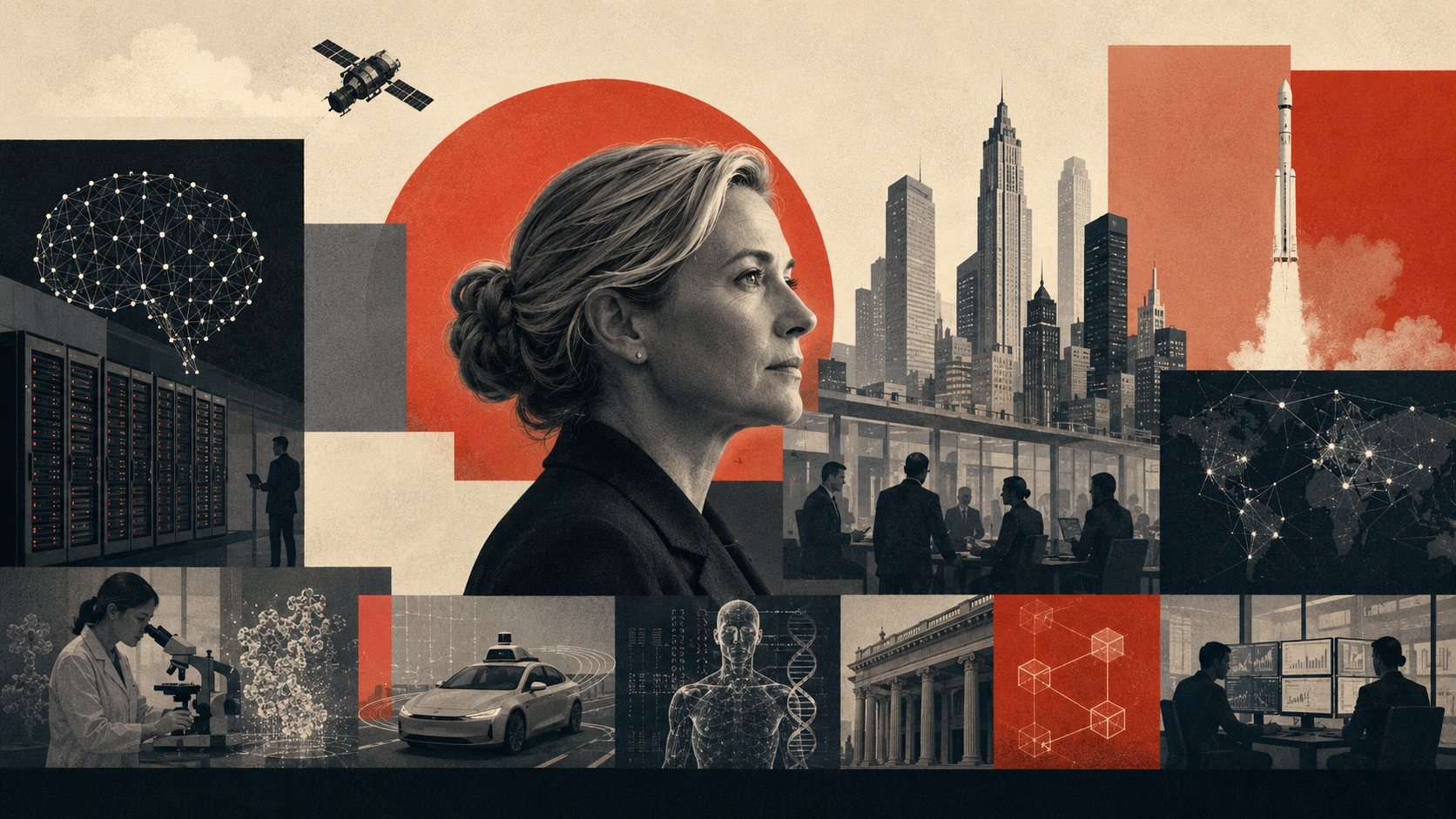
NJF Capital’s portfolio spans artificial intelligence, healthcare, enterprise software, financial infrastructure, biotechnology, aerospace and digital assets. At first glance it looks eclectic. Look closer and the companies are connected by a single conviction: we don’t invest in sectors, we invest in structural change.
That’s why businesses that appear unrelated sit comfortably alongside one another. Groq is building the computing infrastructure that will power the next generation of AI. Applied Intuition is accelerating autonomous systems across mobility and defence. Owkin and Bioptimus are applying AI to biology, opening new possibilities in medical research and precision healthcare. Rippling is rethinking how organisations are built and run, while Revolut and Griffin are redefining the financial plumbing on which modern businesses increasingly depend. Different industries, same underlying belief: technology creates the greatest long term value when it improves human capability, institutional resilience or society’s underlying infrastructure.
This sits naturally within the broader work of NJF Holdings. Across investment, media, sport and public engagement, we keep returning to one question: how can technology expand human potential while preserving the qualities that make human judgement valuable? Human Code is where many of those ideas are explored publicly; NJF Capital is where they’re tested with capital. One asks what the future should look like. The other asks which founders are building it.
Much of today’s debate about AI is framed around substitution: which jobs will disappear, which industries will be automated, which tasks machines will perform more cheaply than people. Reasonable questions, but incomplete ones. Transformative technologies rarely create lasting value simply by replacing existing work. They create new capabilities, new markets and new expectations. The internet didn’t so much digitise newspapers as create platform businesses, cloud computing and the creator economy. Smartphones didn’t just replace cameras; they reshaped commerce, banking, navigation and communication. Artificial intelligence will probably prove just as expansive, and the firms that capture most of the value may not be those building the most visible applications. They may be the ones quietly laying the foundations on which new industries will be built.
That’s one reason Nicole Junkermann has backed businesses as varied as Groq, Consensys, Blockchain.com and SpaceX. Their markets may appear to have little in common, but each is building infrastructure rather than products. Infrastructure has a habit of outlasting headlines.
The same logic runs through our healthcare investments. Medicine is moving, gradually but unmistakably, from reacting to illness towards predicting and preventing it. Owkin, Deep Genomics, Bioptimus and Arda Therapeutics reflect a belief that AI won’t replace clinicians and scientists but will hand them sharper tools: to understand biology, accelerate discovery and improve outcomes for patients.
This is the central idea behind the Human Code. As machines become better at generating information, the uniquely human capabilities of judgement, trust, creativity, ethics and leadership become more valuable, not less. The portfolio reflects that. Whether the field is enterprise software, financial infrastructure, biotechnology or frontier engineering, we’re ultimately backing founders who use technology to augment people rather than sideline them. The most enduring businesses understand that technology is never the destination; it’s the tool that lets people achieve more.
So the common thread running through the portfolio isn’t an industry. It’s a belief that the next generation of defining companies will be built around expanding human capability.
Over the coming months, this series will look at those ideas in more depth: the themes shaping the portfolio, the founders challenging conventional thinking, and the technologies we expect to matter most over the next decade. The technologies will keep changing. Our conviction is that the best investments won’t lose sight of the people they’re built to serve.